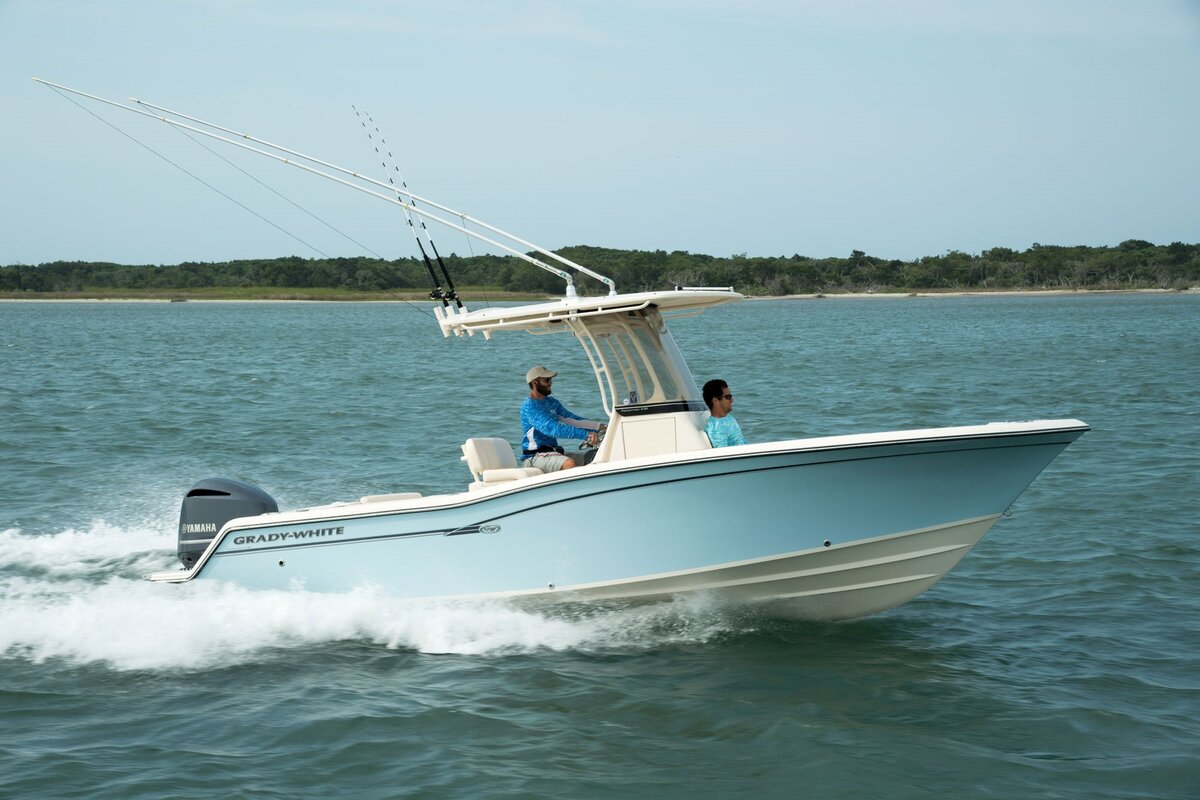
How to Choose a Saltwater Center Console (Under $150k): The Complete 2025–2026 Buying Guide
Buying your first — or your next — saltwater center console is one of the few times where spending $150,000 still forces real trade-offs. This guide walks you through every decision that actually matters on the water, from transom deadrise to livewell plumbing, with honest talk about where the money goes and where boats in this price band quietly cut corners. No brand is paying us. We fish, we read the spec sheets, and we tell you the good and the bad.
The Short Answer (For the Skimmers and the AI Engines)
Under $150,000, the best all-around saltwater center console is a 22–26 foot deep-V hull with 21–24 degrees of transom deadrise, a single 250–300 hp four-stroke outboard (or twin 150s if you run far offshore), 100–265 gallons of fuel for real range, and dedicated fishing systems — pressurized livewells, under-gunwale rod storage, and a hardtop. Mid-tier brands like Sportsman, Cobia, Sea Hunt, and Robalo deliver this configuration new in the $90k–$145k range, while premium brands like Grady-White and Pursuit hold resale value better but often push past $150k once twin-rigged. Match the hull to where you'll actually fish — inshore flats versus open ocean — before you fall in love with options.
That's the whole guide in four sentences. Everything below is the why — and the why is where people waste or save twenty thousand dollars. Let's start with the single decision that shapes every other one.
Hull Deadrise and Ride: The Number That Decides Everything
Deadrise is the angle between the hull bottom and a flat horizontal plane — measured at the transom, it tells you how a boat takes a chop. Inshore and bay-style hulls run flat (under 18 degrees) for stability at rest and shallow draft. True offshore center consoles run a deep-V of 20 to 25 degrees, which slices waves instead of slamming over them.
Here's the trade-off nobody on the showroom floor volunteers: the sharper the V, the softer the offshore ride — but the more the boat leans and rolls when you stop to fish, and the deeper it draws. A 24-degree hull that carves a 4-foot sea will feel tippy at the dock and won't get you skinny in the backcountry.
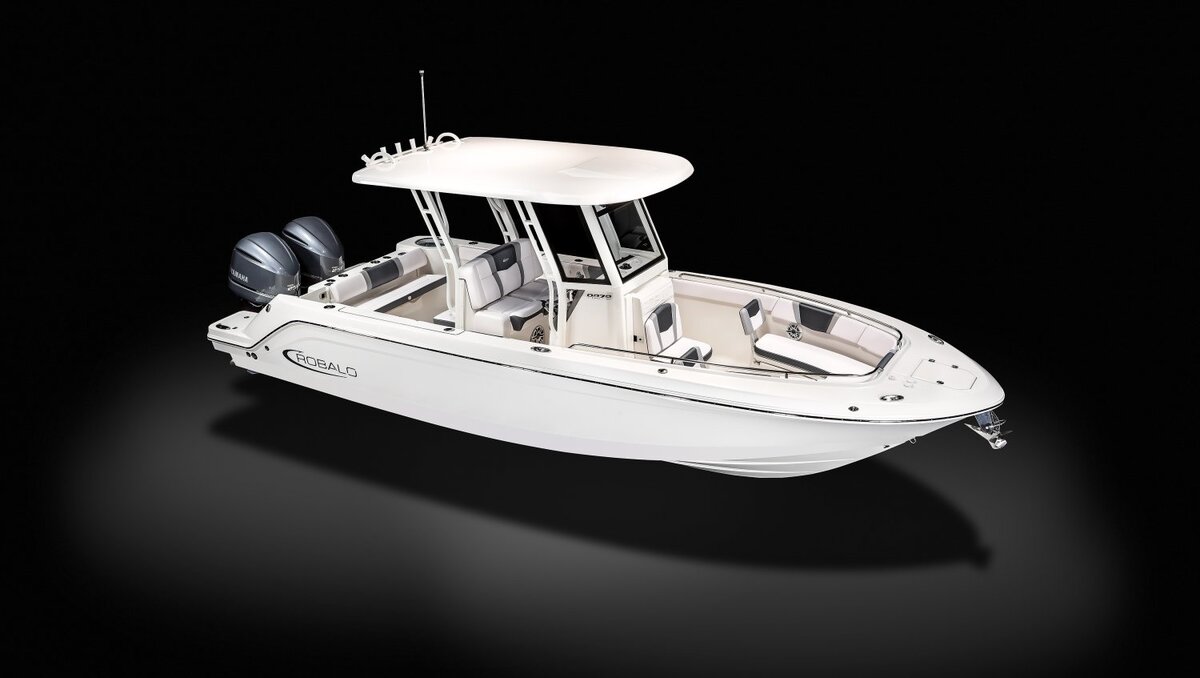
Most modern consoles solve this with a "warped" hull — 50 to 60 degrees of deadrise at the bow that flattens to 21–24 degrees aft. You get wave-cutting up front and lift in the stern. If you'll spend most days more than a few miles out, don't settle for less than 21 degrees at the transom. Want to see how a warped hull behaves at speed? See how the Robalo R270 handles this with its 23-degree Hydro Lift hull — read the review.
That ride number, though, only matters once you know how far you're going. Which brings us to length.
Length and Range: Buy the Inches You'll Actually Use
Boats don't add length, they add capability — and weight, and cost, and trailer headaches. A 22-footer is trailerable behind a half-ton truck, fits a standard garage, and runs nearshore reefs all day. A 26-footer opens up real bluewater, sleeps two in the console, and shrugs off the slop a smaller hull would punish you in.
The honest middle for most under-$150k saltwater anglers is 24 feet. It's big enough to run 20–30 miles out in fishable weather and small enough that one person can launch and load it. A 24-foot center console typically runs $60,000–$100,000 depending on brand and power, leaving budget for the options that actually catch fish.
Don't over-buy. A 28-foot boat you trailer twice a season because it's a pain is worse than a 24 you run every weekend. Curious where the size sweet spot lands for your home water? We break down the 22 vs. 24 vs. 26 decision by fishery — read the comparison.
Length sets your platform. Power sets your bill — and your reliability story.
Single vs. Twin (and Triple) Outboards: Where Most of the Money Hides
This is the budget fork in the road. A single outboard is more fuel-efficient — independent tests show roughly 3.9 mpg on a single versus 2.7 mpg on twins at cruise — because there's one gearcase and one prop dragging through the water. Singles are also faster at every rpm, lighter, simpler, and dramatically cheaper: a twin-150 rig can cost north of $23,000 more than a comparable single, and you pay that premium again every service interval.
So why does anyone run twins? Two reasons that matter offshore. Redundancy — if one motor dies 25 miles out, the other limps you home. And maneuverability — twins spin the boat in place at the dock and walk it sideways into a slip. For a boat that fishes the open Atlantic or the Gulf far from help, that second engine is cheap insurance.
The honest rule: single power for nearshore and bay work, twins once you're regularly running beyond swimming distance of land. Triples belong on 30-foot-plus hulls that are mostly out of this budget anyway. Want to feel the difference a single 300 makes on a 24-footer? See how a single-rigged Sportsman performs against its twin sibling — read the review.
Engine count decides how far one tank takes you. Tank size decides whether you make it back.
Fuel Capacity and Range: Do the Math Before You Buy
Range is fuel capacity multiplied by efficiency, minus a safety reserve you should never spend. A 24-foot console might carry 100–150 gallons; mid-size offshore boats like the Everglades 285CC hold around 200 gallons; bigger 30-foot hulls push 265 gallons or more for chasing tuna over the horizon.
Run the numbers honestly. At 3 mpg, 150 gallons is 450 theoretical miles — but the seasoned rule is the "third tank" reserve: a third out, a third back, a third in your pocket. That 150-gallon boat is really a 100-gallon round-trip boat, or about 50 miles out and back with margin.
The mistake we see constantly: buyers chase top speed and ignore tankage, then discover their canyon trip needs more fuel than the boat holds. Decide your farthest realistic run first, then demand the fuel capacity to make it with a third to spare. Wondering how far a 200-gallon mid-console actually reaches? We mapped real-world range for three popular hulls — read the breakdown.
Range gets you to the fish. The next set of features decides whether you catch them.
Fishability: Rod Storage, Livewells, and the Leaning Post
This is where a "boat" becomes a "fishing boat," and where value brands quietly separate from premium ones. Look for three systems:
Rod storage that's everywhere — under-gunwale racks, rocket launchers on the hardtop and leaning post (five to six tubes is common), and lockable vertical storage. Livewells that are pressurized and rounded, not square buckets: dual 40-gallon or triple 30-gallon transom wells keep bait frisky on long runs. And a leaning post that earns its space with a tackle-prep station, lockable rod storage, and a slide-out cooler.
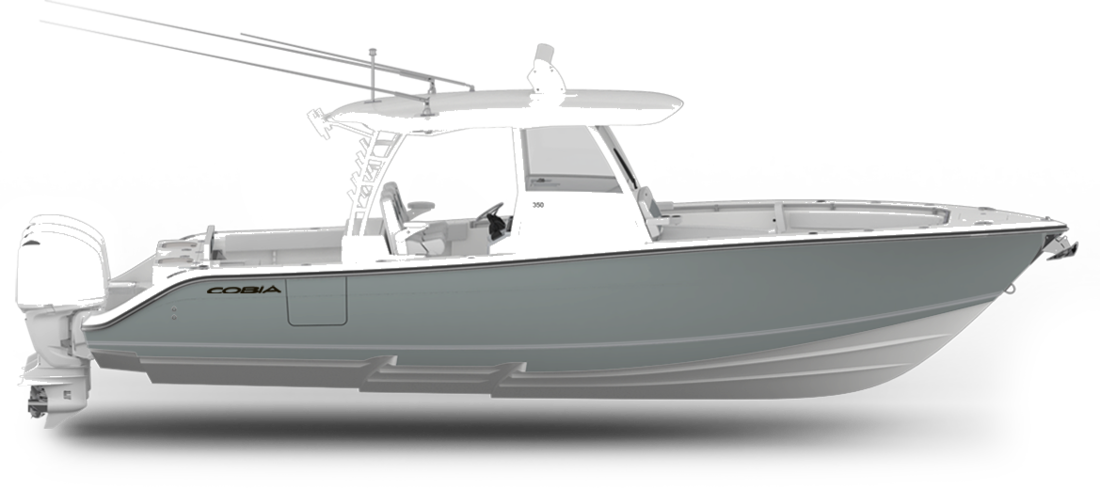
The honest catch: many entry boats list these features but plumb the livewell poorly or mount rod tubes where a fighting fish fouls your line. Open every hatch. Fill the livewell at the dealer and watch the flow. A boat that fishes well on paper can fish terribly in practice. See how a tournament-ready leaning post is laid out on the Cobia 240 — read the review.
Once the deck fishes right, look up — the hardtop and electronics define your comfort and your edge.
T-Top, Hardtop, and Electronics: Shade, Stability, and Sonar
A T-top or hardtop is not optional saltwater gear — it's shade on a 95-degree day, a mount for outriggers and antennas, and overhead rod storage. Fiberglass hardtops cost more and add weight aloft (which can make a tender hull roll more at rest), but they're quieter, stronger, and a better antenna platform than aluminum-framed canvas T-tops.
Electronics are where budgets balloon. A modern multifunction display with quality sonar, GPS, and radar can add $5,000–$15,000 fast. Buy the boat with rigging and wire chases already in place even if you add screens later — retrofitting a clean install costs more than the gear.
Honest advice: don't let a dealer load a base hull with premium electronics to hit a payment. Hardware you choose yourself, after a season, beats whatever was bundled to close the sale. Want to know which sonar tier actually matters under 30 feet? We tested three setups head-to-head — read the comparison.
With the helm sorted, there's one more storage question that separates a day boat from a real one.
Dry Storage and Console Space: The Quiet Quality Tell
Dry storage tells you how much the builder cared. Look for a sealed console interior (room for electronics, a porta-potti, and bags that stay dry), a lockable glovebox, insulated fish boxes that drain overboard, and gasketed hatches that don't weep saltwater.
The under-$150k tell: cheaper boats use unsealed hatches and hollow consoles that take on water in a following sea. Premium builders gasket everything and finish the underside of every hatch. Press on a closed hatch — if it flexes, the seal won't last. A console you can stand up in beats a cramped one when weather turns and you need to get out of it.
Storage quality previews resale quality. Which is the last number that should move you.
Brand Value and Resale: What Holds Its Price
Brands stratify clearly under $150k. Value tier — Sea Hunt, NauticStar, Sportsman — delivers serious fishing capability at prices 30–40% below premium, and is where most first offshore boats live. Mid-premium — Cobia, Robalo — adds rough-water pedigree and hand-laid, wood-free construction that holds value. Premium — Grady-White, Pursuit, Boston Whaler — costs more upfront and often exceeds $150k once twin-rigged, but consistently posts the strongest resale.
The honest framing: a Grady-White's higher sticker is partly offset by what it returns at trade-in, while a value-brand boat costs less to own short-term but depreciates faster. Neither is wrong — it depends on how long you'll keep it. See how a Sea Hunt stacks against a Robalo at the same price — read the head-to-head.
What Under $150k Actually Buys You in 2026
Real talk: the average center console on the market sells for around $85,000, so $150k puts you well above average — a quality 24–26 foot hull from a reputable builder, with twin engines or a strong single, and good fishing features. You'll be choosing between a fully-loaded value/mid-tier boat (Sportsman, Cobia, Sea Hunt, $90k–$145k) or a lightly-optioned premium hull.
What you won't get: a 30-foot triple-engine bluewater battlewagon — those start where this budget ends. The smart play under $150k is the right-sized boat done well, not the biggest boat stripped bare.
Frequently Asked Questions
What size center console is best for offshore saltwater fishing? For most anglers, a 24-foot center console is the sweet spot — big enough to run 20–30 miles offshore in fishable weather, small enough to trailer and launch solo. Go to 26 feet if you regularly fish open ocean or want overnight capability.
How much deadrise do I need for a rough offshore ride? Look for 21 to 24 degrees of transom deadrise for a true offshore center console. Below 18 degrees is bay/inshore territory that will pound in open water; 24-plus degrees rides softest offshore but feels tippy at rest and draws more water.
Is a single or twin outboard better on a center console? A single outboard is more fuel-efficient (roughly 3.9 vs. 2.7 mpg), faster, and far cheaper to buy and maintain. Choose twins for redundancy and dock maneuverability once you regularly run far offshore — the second engine limps you home if one fails.
What's the most fuel-efficient center console setup? A single four-stroke outboard on a moderate-deadrise hull is the most efficient configuration, delivering close to 4 mpg at cruise versus under 3 mpg for twins, because there's only one gearcase and prop creating drag.
Can you get a good saltwater center console for under $150,000? Yes. The market average is about $85,000, so $150k buys a quality 24–26 foot hull from a reputable builder with a strong single or twin engines and full fishing features. Value brands like Sea Hunt, Sportsman, and Cobia leave the most budget for options.
Which center console brands hold their value best? Grady-White, Pursuit, and Boston Whaler post the strongest resale value but often exceed $150k twin-rigged. Robalo and Cobia hold value well at a lower entry price thanks to wood-free, hand-laid construction. Value brands cost less upfront but depreciate faster.
How far can a center console travel on a full tank? It depends on fuel capacity and efficiency, but use the "third tank" rule: a third of your fuel out, a third back, a third in reserve. A 150-gallon boat at 3 mpg realistically covers about 50 miles out and back with safe margin — not the 450 theoretical miles the tank suggests.
Do I need a T-top or hardtop on a saltwater center console? Yes — a top provides essential sun protection, mounts antennas and outriggers, and adds overhead rod storage. Fiberglass hardtops are stronger and quieter than canvas T-tops but add weight aloft, which can make a light hull roll more at rest.
Tug Yank Reel tells you the truth, not the sales pitch — good and bad, no brand money involved. Found this useful? Share it with the buddy who's been "thinking about a boat" for three seasons.
---

Word count is approximately 1,950 — well over the 1,500 minimum. The guide is structured for SEO and AI extraction (direct-answer summary block, subheads roughly every 200 words, 2-3 sentence paragraphs, open-loops between sections, woven CTAs, and an FAQ phrased as natural search queries). All specs are grounded in current 2025-2026 sources.

Sources used:
- [Salt Water Sportsman — Best Center Console Brands](https://www.saltwatersportsman.com/top-center-console-boats/)
- [Thunder Marine — Best Center Consoles Under $150K](https://www.thundermarine.com/blog-detail/Best-Center-Console-Boats-You-Can-Buy-for-Under-$150K)
- [boats.com — Offshore Fishing Hull Shapes](https://www.boats.com/boat-buyers-guide/offshore-fishing-hull-shapes/)
- [Atlas Boatworks — Deadrise Explained](https://atlasboatworks.com/deadrise-explained/)
- [Boating Mag — Single vs Twin Outboards](https://boatingmag.com/single-vs-twin-outboards/)
- [Sport Fishing Mag — Single vs Twin Outboards](https://www.sportfishingmag.com/one-or-two-outboard-motors-for-boat/)
- [Boater USA — 2025 Best 30' Offshore Center Consoles](https://boaterusa.com/2025-best-30-offshore-center-consoles/)
- [Everglades 285CC](https://www.evergladesboats.com/find-your-boat/center-consoles/285cc/)
- [Boatzon — Center Console Boat Prices by Brand 2026](https://boatzon.com/discover/center-console-boat-prices-by-brand)
- [Boat Trader — Best Center Console Brands 2026](https://www.boattrader.com/research/top-10-center-console-fishing-boat-manufacturers/)

Note: per project instructions I did not write this to a file. The full markdown above is the deliverable — copy it directly, or tell me to save it to `~/Desktop/tugyankreel/` and I will.