How to Choose a Fishing Kayak: The Honest 2026 Buyer's Guide
Buying your first (or next) fishing kayak comes down to eight decisions, not eighty. This guide walks you through every one — pedal vs. paddle, stability, weight, hull, water type, and budget — with the trade-offs nobody in the boat shop wants to admit. No hype. Just what actually matters when you're sitting on the water at 6 a.m. with a rod in your hand.
The Short Answer (Read This First)
The best fishing kayak for you is the one matched to where you fish, how you'll carry it, and what you can honestly afford to rig. For most anglers on lakes and calm inshore water, a 11-to-12-foot pedal-drive kayak with a 34-inch-wide stable hull and 400+ lb capacity is the sweet spot — stable enough to stand, hands-free for fishing, and fast enough to cover water. If you're on a tight budget, fish small rivers, or car-top alone, a lighter paddle kayak under 60 lbs will serve you better and cost a third as much. There is no single "best" kayak — there's only the best fit, and fit is a chain of trade-offs.
Now here's why each of those trade-offs exists, so you can make the call for your water instead of taking ours.
Pedal vs. Paddle vs. Motor: The First Fork in the Road
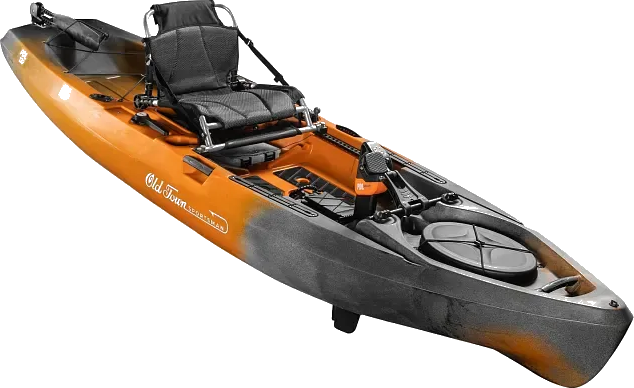
This is the decision everything else hangs on, so start here. Pedal drives free your hands to fish, hold position against wind and current, and cruise around 3.5–4 mph with your legs — the strongest muscles you've got. The cost: more weight, more moving parts to maintain, a higher price tag, and a drive unit that won't clear truly skinny water without retracting.
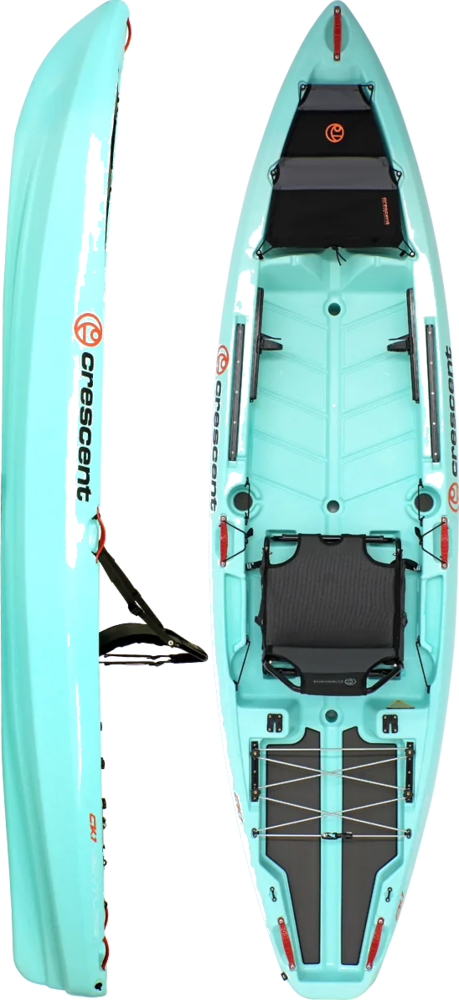
Paddle kayaks are the opposite trade. They're lighter, cheaper, nearly maintenance-free, and they'll float in inches of water. But every cast you make, you're putting the paddle down and giving up boat control — and you'll average closer to 2.5–3 mph fighting wind the whole way.
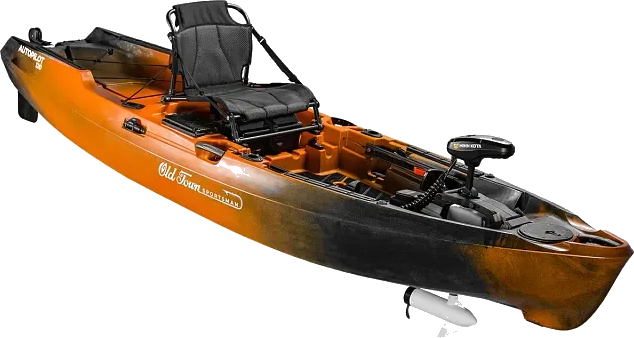
Motorized kayaks (and pedal-to-motor conversions) are the newest tier — effortless range and trolling speed, at the price of weight, batteries to charge, and the most money on the table. Most anglers don't need one until they're covering big water regularly. Which water you fish decides whether that extra propulsion is worth carrying — and we'll get there.
Stability and Standing: Primary vs. Secondary
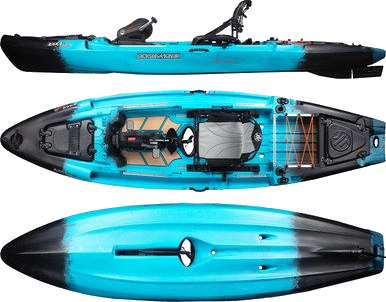
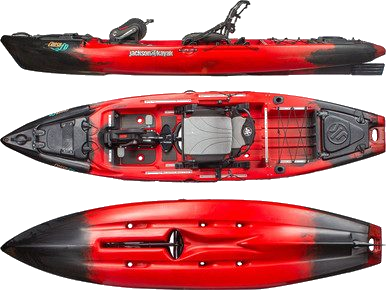
"Stable" isn't one number — it's two. Primary stability is how solid the kayak feels sitting flat; secondary stability is how far it leans before it actually flips. Flat and pontoon hulls deliver huge primary stability — the kind that lets you stand and sight-cast on a calm lake. Rounded and V-shaped hulls trade some of that initial steadiness for better secondary stability, so they roll with waves instead of fighting them.
Here's the honest part most buying guides skip: a hull tuned for standing on a pond will feel twitchy and tiring in open-water chop, and a hull built to shrug off swells will feel tippy the first time you stand on flat water. You can't max both. Width buys you stability too — 34-inch-wide platforms like the Ocean Kayak Malibu Pedal let most people stand and fish freely — but every inch of width costs you speed.
Want to see how a wide standing platform behaves once you actually put weight on the gunwale? See how the Malibu handles standing-and-casting — read the full review before you commit.
Weight and Car-Topping: The Decision You'll Feel Every Trip
The spec that quietly ruins more kayaks-bought-wrong than any other is weight — because you don't experience it in the store, you experience it alone in a parking lot at dawn. A 57-lb kayak car-tops easily and loads into a truck bed solo. A loaded pedal kayak like the Hobie Mirage Outback hits 103 lbs before you add gear, and that's a two-person lift or a trailer, full stop.
Be brutally honest about your launch reality. Roof rack and no help? Stay under ~60 lbs or budget for a lift-assist system or a small trailer. Drive-up launches and a truck bed? You can carry the weight a stable pedal hull requires. The lightest pedal options exist for exactly this tension — the Native Slayer Propel 10 comes in around 62 lbs without the drive — but in general, stability and propulsion both cost weight, and weight is paid in your back, every single trip.
Capacity: Plan for Loaded, Not Empty
Weight capacity is you, plus your gear, plus water and a cooler and a stringer of fish — not just your bodyweight. The working rule is to keep your total load under about 70% of the rated capacity, because a kayak loaded to its limit sits low, handles sluggishly, and takes on water in chop.
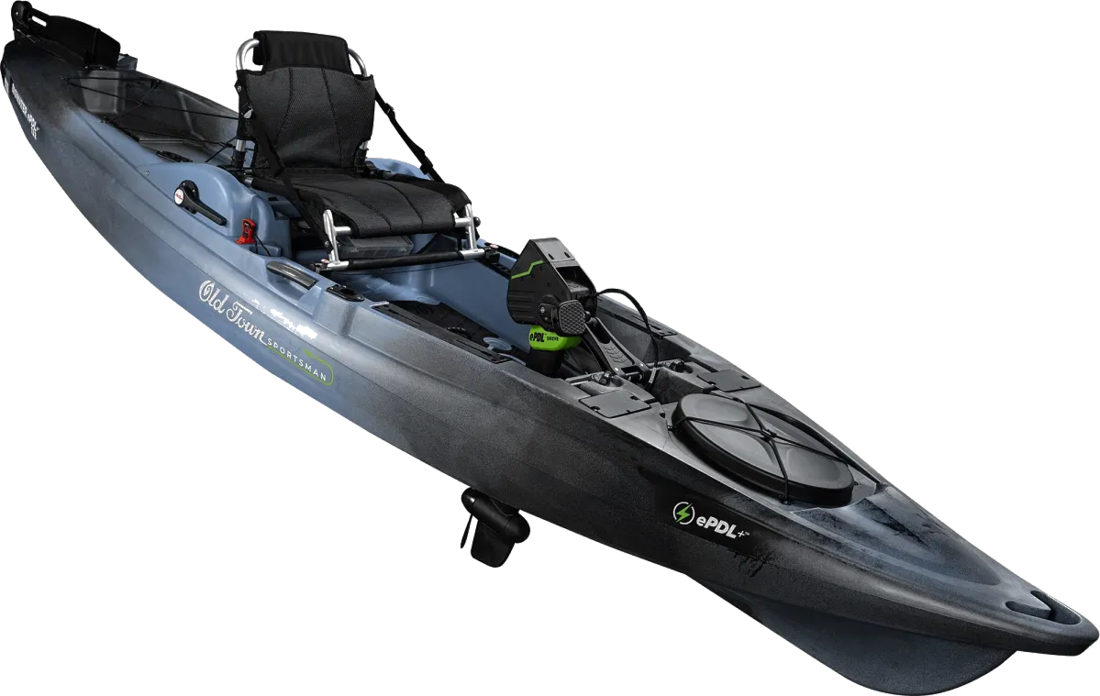
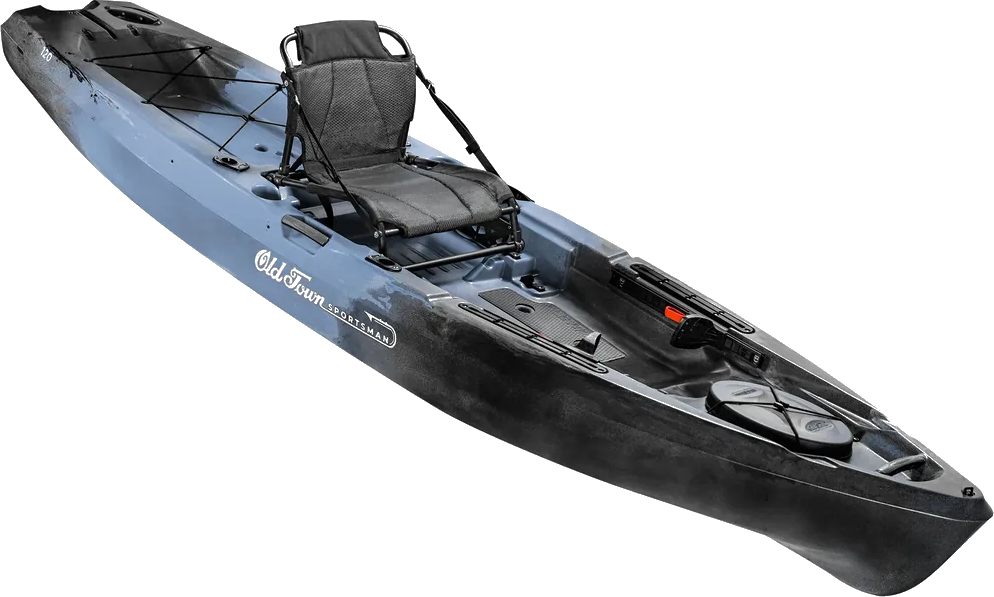
Capacity ranges widely: the Old Town Sportsman BigWater PDL 132 is rated to 500 lbs, while many compact models sit closer to 350–400. If you're a bigger angler, run a lot of gear, or want to add a battery and electronics later, buy more capacity than you think you need today — because the rig you build in year two always weighs more than the boat you bought in year one. How much of that you'll actually fill depends on storage and rigging, which is its own section below.
Hull Shape and Tracking: Speed vs. Turning
Length and rocker set how your kayak moves through water. Longer hulls (12 ft+) track straighter and cut faster — they cover open water and hold a line in crosswind. Shorter hulls turn on a dime but wander and feel slower over distance. Rocker — the banana-like upsweep from bow to stern — is the other lever: more rocker means quick, agile turning (great in current), less rocker means true, efficient tracking (great on big flat water).
The mistake is buying a nimble, high-rocker boat for long open-water paddles, then fighting it to hold a heading all day — or buying a long tracking machine for a tight, twisting creek it can't turn in. Match the hull to your water, not to the showroom.
Seating and Comfort: The Spec That Decides How Long You Fish
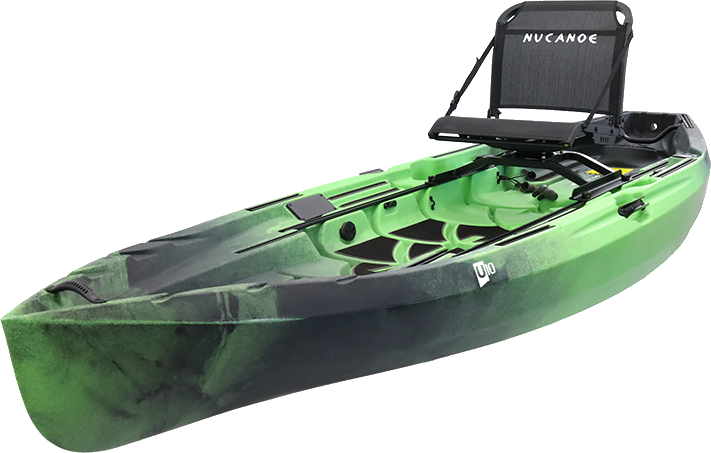
Cheap kayak seats end trips early. A sit-on-top with a low molded seat soaks your backside and aches within an hour; an elevated, framed lawn-chair-style seat with adjustable height keeps you dry, gives you a higher casting vantage, and lets you fish all day. Comfort isn't a luxury line item — the most uncomfortable kayak is the one that sends you home at 10 a.m., and the comfortable one is the one you actually use. If you can only upgrade one thing on an entry-level boat, upgrade the seat.
Storage and Rigging: Buy the Platform, Not Just the Boat
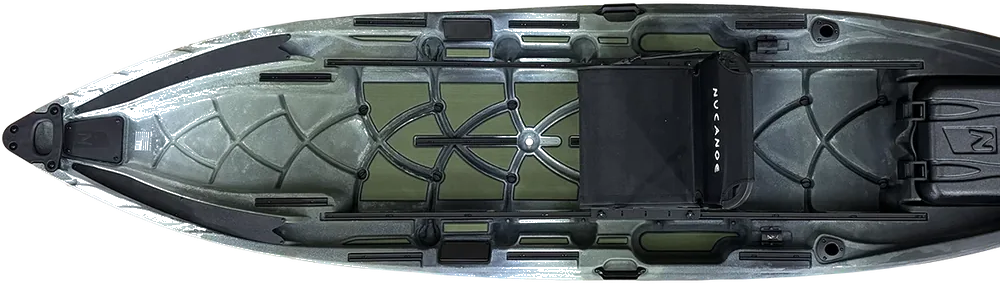
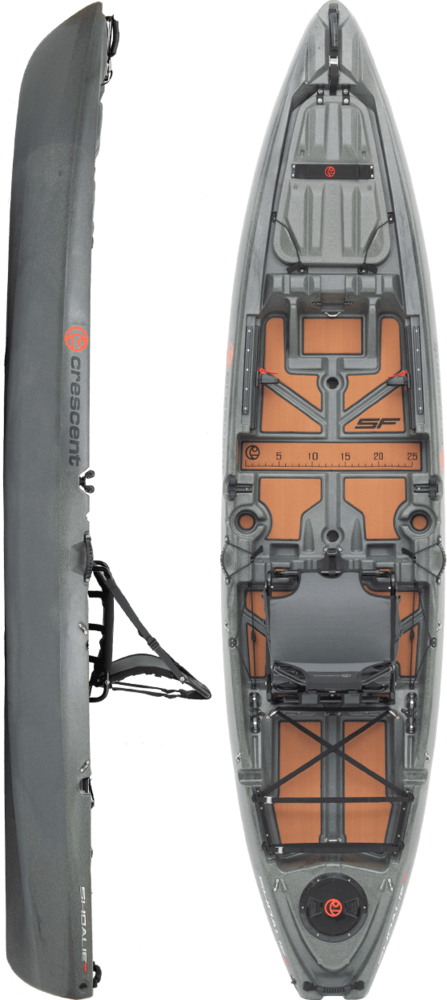
A fishing kayak is a platform you'll build on, so look at what it lets you add. You want sealed hatches for tackle, a rear tankwell that fits a crate or cooler, and — critically — factory accessory tracks and molded recesses for rod holders, a fish finder, and a transducer. Boats designed around track systems make rigging clean and modular; boats without them force you to drill the hull and hope.
Think one season ahead. The rod holders, electronics, and anchor system you'll inevitably want are far easier to mount on a kayak that planned for them. A modular boat saves you money and frustration later — which matters most when you're shopping budget tiers, the last big decision.
Water Type: Let Where You Fish Make the Call
Everything above resolves the moment you name your water:
- Lakes and ponds (calm, shallow, standing): Prioritize primary stability — flat or pontoon hull, wide beam. Standing to sight-cast is realistic here.
- Rivers and moving water: Prioritize secondary stability and maneuverability — a more rounded hull with more rocker, shorter length, and a paddle (drives drag in skinny, rocky water).
- Saltwater and inshore/coastal: Prioritize secondary stability and tracking — a longer (12 ft+) V or rounded hull that rises over swells and holds a line, plus rinse-friendly hardware. An ocean hull should roll with the waves rather than resist them.
The trap is buying for the trip you fantasize about instead of the water you'll fish 90% of the time. Buy for the 90%.
Budget Tiers: What Your Money Actually Buys in 2026
Here's the honest map of current pricing:
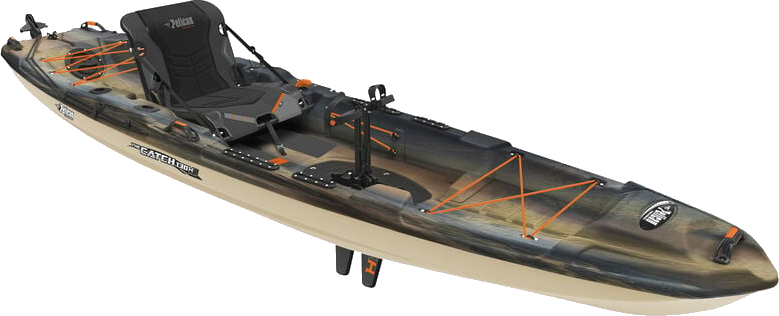
- Entry-level (under $1,000): Capable paddle kayaks like the Pelican Catch Mode 110 (~$799) deliver real stability and fishing features — no pedal drive, but a legitimate way to start. Budget pedal kayaks begin around $900.
- Mid-range ($1,000–$2,000): The meat of the market. Solid pedal options like the Hobie Mirage Passport 10.5 R (
$1,799) and stable platforms like the Pelican Catch HD II ($1,550) live here. Most anglers should shop this tier. - Premium ($2,000–$6,000): Top-tier pedal and motorized rigs run from ~$2,000 to nearly $6,000. You're paying for refined drives, premium materials, and big-water capability — real value for serious anglers, overkill for a pond hopper.
Pedal kayaks cost more because the drive mechanism is genuinely complex — that price gap is real engineering, not just branding. Spend where it matches your water and your honesty about how often you'll fish.
A Simple Way to Decide
Name your water. Name your launch (roof rack or truck bed). Set your real budget. Those three answers collapse the whole matrix: water picks your hull and propulsion, launch picks your weight ceiling, budget picks your tier. Everything else — seat, storage, capacity — follows from there. Buy the boat that fits those three truths, rig it one season at a time, and you'll out-fish the angler who bought the most expensive kayak for water he never fishes.
FAQ
-
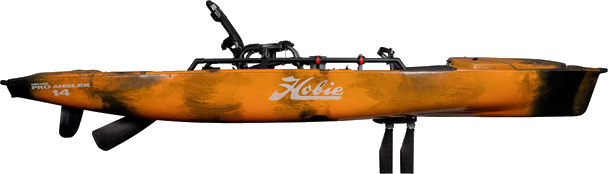
q: What's the best fishing kayak for big water and ocean fishing? a: For big water, choose a longer hull — generally 12 feet or more — with a V-shaped or rounded bottom built for secondary stability. The added length helps the hull rise over swells and boat wakes while tracking straight over distance, and the rounded hull rolls with the waves instead of fighting them. Stable wide pedal models like the Hobie Pro Angler 14 and Old Town Predator PDL are popular for offshore and inshore use because they pair that length with a platform stable enough to fight fish from.
-
q: Is a pedal kayak worth it? a: A pedal kayak is worth it if you fish open water, deal with wind or current, and want your hands free to cast and fight fish — pedal drives hold position, cruise around 3.5–4 mph, and use your strong leg muscles. It's not worth it if you mostly fish skinny rivers and rocky shallows (drives drag and need retracting), if you car-top alone (pedal hulls are heavy, often 90–100+ lbs loaded), or if you're on a tight budget, since pedal models start around $900 and climb past $4,000.
-
q: How much should I spend on a fishing kayak? a: Plan on under $1,000 for a capable entry-level paddle kayak, $1,000–$2,000 for the mid-range where most anglers should shop (including affordable pedal models), and $2,000–$6,000 for premium pedal and motorized rigs. Pedal drives add cost because the mechanism is genuinely complex. Budget separately for accessories — a better seat, rod holders, and electronics often add $200–$500.
-
q: How heavy a fishing kayak can one person car-top? a: Most people can solo car-top a kayak up to roughly 60 lbs onto a roof rack. Above that, you'll want a second set of hands, a lift-assist roller system, or a small trailer — loaded pedal kayaks routinely hit 90–103 lbs before gear. Weight is the spec anglers most often regret ignoring, because you feel it alone in the parking lot every single trip, not in the store.
-
q: What size fishing kayak should I get? a: Match length to water: shorter kayaks (10–11 ft) turn quickly and suit tight rivers and small ponds, while longer kayaks (12 ft+) track straighter, cruise faster, and handle open-water chop and swells. Longer means more speed and better tracking but more weight and a wider turning radius — so size up for big water and down for twisting creeks.
-
q: What's the most stable fishing kayak for standing? a: The most stable kayaks for standing have wide hulls — around 34 inches or more — with flat or pontoon bottoms that maximize primary stability. Wide platforms like the Ocean Kayak Malibu Pedal let most anglers stand and sight-cast confidently on calm water. The trade-off is speed: that same width and flat hull feels slower and gets tippy in open-water waves, where a narrower V-hull would feel more secure.
-
q: Pedal or paddle for river fishing? a: Paddle is usually the better choice for rivers and skinny, rocky water — a pedal drive drags bottom and has to be retracted in the shallows, while a paddle clears obstacles and works in inches of water. Pick a shorter hull with more rocker and good secondary stability so it maneuvers through current and rolls with the moving water rather than fighting it.
Sources: Paddling Magazine — Best Pedal Kayaks 2026 · Kayak Angler — Best Pedal Fishing Kayaks 2026 · On The Water — Fishing Kayak Buyer's Guide · Paddling Magazine — Kayak Hull Types · Paddling Magazine — Kayak Prices · Eco Fishing Shop — Hull Shape & Stability · Festive Water — Primary vs. Secondary Stability · Aquamarine Power — Best Fishing Kayaks 2026 · KayakGuru — Best Pedal Fishing Kayaks 2026